Blog

Compute, Containers, and Cost Control — AWS’s Latest Cost-Saving Updates

October 10, 2025, served as a strong reminder that AWS is relentlessly driving new compute efficiency and managed infrastructure options. These strategic updates—including major new EC2 instance releases and fully managed container compute—demand disciplined cost management practices to maximize the return on cloud investment (ROI).

For cloud financial management to be effective, it must operate as a strategic function, moving beyond mere cost reduction toward maximizing business value. The challenge now lies in ensuring that these new, powerful resources are utilized optimally and funded strategically, making automated commitment management (RIs, SPs, CUDs) absolutely critical.

Usage.ai addresses this fundamental challenge by focusing entirely on automating the financial layer across AWS, GCP, and Azure, providing guaranteed savings on compute commitments through a minimal-access model that optimizes the billing layer.

I. Accelerating Performance: New EC2 Price-Performance Standards

The most immediate financial impact results from the introduction of several new EC2 instance families, which set new price-performance benchmarks that directly influence the Total Cost of Ownership (TCO). Every new instance type requires re-evaluation of the current commitment strategy to ensure optimal utilization and cost efficiency.

  1. General Purpose Workloads:
  • AWS launched the new general-purpose Amazon EC2 M8a instances.
  • These instances run on AMD’s 5th Generation EPYC processors.
  • They deliver up to 30% better performance and 19% better price performance compared to the previous M7a instances.
  • The M8a instances also feature improved memory bandwidth, networking, and storage capabilities for general-purpose workloads.

Amazon EC2 M8a
  1. Compute-Optimized Workloads:
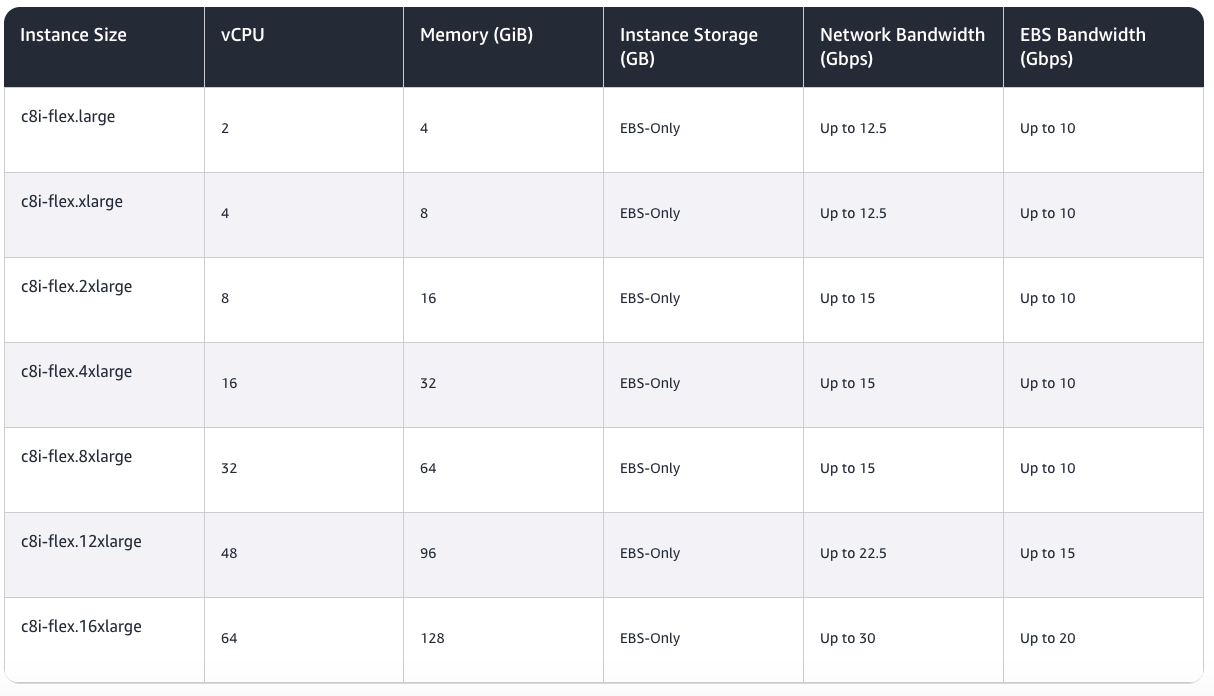
  • AWS also introduced new compute-optimized Amazon EC2 C8i and C8i-flex instances.
  • These instances are powered by custom Intel Xeon 6 processors available exclusively on AWS.
  • They offer up to 15% better price performance and 20% higher performance than previous generations, along with 2.5 times more memory throughput.

C8i-flex

New generations of EC2 instances make existing Reserved Instances (RIs) and Savings Plans (SPs) tied to older generations less efficient. Continuous analysis of usage patterns and automated adjustment of commitments are key to capturing new, superior discounts and achieving a lower unit cost.

II. Automating Infrastructure Management: The Shift to Billing Layer Optimization

AWS continued its push toward reducing operational overhead by offering fully managed compute options and strengthening core security controls. While this simplifies life for engineers, it shifts the optimization burden firmly onto the FinOps team—specifically, managing the commitment layer beneath the managed service.

1. Lowering TCO for Containers:
  • AWS announced Amazon ECS Managed Instances, a new compute option for containerized applications.
  • This service eliminates infrastructure management overhead while retaining core EC2 capabilities.
  • Designed to reduce the Total Cost of Ownership (TCO) for container workloads.
2. Enhanced Security Control:
  • AWS IAM Identity Center now supports customer-managed KMS keys for encryption at rest. This is a major update that provides customers with greater control over encryption and improves compliance capabilities for regulated industries.

As infrastructure management is abstracted away (e.g., ECS Managed Instances), engineering teams gain velocity. However, maximizing profitability requires ensuring the compute capacity being managed is discounted. Performance metrics provide the insight teams need to optimize resources and reduce costs effectively.

III. The Agent Foundation: Funding Innovation through Cost Efficiency

The strategic foundation for AWS’s massive AI push was also established with key Bedrock announcements, which paved the way for high-consumption agentic services like the AWS Quick Suite. Investing in these areas requires a clear, automated path to cost reduction elsewhere to fund the innovation.

  • Advanced AI for Development: The integration of Anthropic’s Claude Sonnet 4.5 (recognized as the world's best coding model according to SWE-Bench) into Amazon Bedrock and its availability in Amazon Q CLI and Kiro enhances developer productivity through context-aware code generation.
  • Scaling Agent Infrastructure: The announcement of the Bedrock AgentCore Model Context Protocol (MCP) Server (Amazon Web Services) provides a purpose-built foundation for rapid agent development and scaling production agent infrastructure. This supports the move toward agentic AI that promises to transform work organization and operations.

These highly advanced, potentially high-cost services make the principle of "Measure AI ROI". The faster and cheaper organizations can run their baseline infrastructure, the more capital they free up to invest in these transformative AI platforms.

Guaranteeing Savings and Eliminating Risk: Usage.ai 

The relentless pace of AWS feature releases (new EC2 families, managed compute, and agent platforms) creates a paradoxical situation: more opportunities for savings, but greater risk of commitment lock-in due to ever-changing infrastructure.

Usage.ai solves this by focusing entirely on automating the financial layer across AWS, GCP, and Azure.

Key Benefits for Usage.ai Customers:
  • Risk Elimination: Usage.ai offers Insured Commitments (Flexible Savings Plans/Reserved Instances). This eliminates the fear of over-committing, guaranteeing that customers never pay for an underutilized resource. This is achieved by underwriting RI purchases with a Guaranteed Buyback Clause.
  • Performance-Based Pricing: Our model is simple; you are billed a percentage of the realized savings generated through the Flex Commitment Program, ensuring aligned incentives.
  • Operational Simplicity: The integration process is seamless, fast, and hassle-free, often completed in under an hour, requiring only read-only access to billing metadata (Instance Type, Region, CPU Utilization, Existing Commitments). This ensures zero code change, zero downtime, and no engineering work required to implement savings.

In a cloud environment defined by volatility and rapid TCO evolution, automated, risk-free commitment management is the most effective way to secure the 30-50% savings potential necessary to fund aggressive adoption of the new AI infrastructure.

Ready to maximize profitability by automating your cloud commitment spend?

Usage.ai provides guaranteed savings on compute commitments across AWS, Azure, and GCP, operating with a minimal-access model focused solely on optimizing the billing layer.

Share this post

You may like these articles

See all
 Multi-Cloud Cost Optimization Guide | AWS, Azure, GCP Savings
All Articles
Cloud Cost Optimization

Multi-Cloud Cost Optimization Guide | AWS, Azure, GCP Savings

A practical guide to multi-cloud cost optimization across AWS, Azure, and GCP. Learn commitments, rightsizing, governance, and key FinOps best practices.

December 9, 2025
3
 min read
AWS Savings Plans vs Reserved Instances: A Practical Guide to Buying Commitments
All Articles
New-Releases

AWS Savings Plans vs Reserved Instances: A Practical Guide to Buying Commitments

Compare AWS Savings Plans vs Reserved Instances with a practical breakdown. Learn tradeoffs and how Usage.ai’s Flex Commit + Cashback improves savings reliability.

December 5, 2025
3
 min read
 AWS Database Savings Plans Explained for DB Teams
All Articles
New-Releases

AWS Database Savings Plans Explained for DB Teams

AWS Database Savings Plans introduce flexible, spend-based discounts for managed databases. Learn how this change affects DB teams and cost planning

December 4, 2025
3
 min read

Save towards your growth

Thank you! Your submission has been received!
Oops! Something went wrong while submitting the form.